


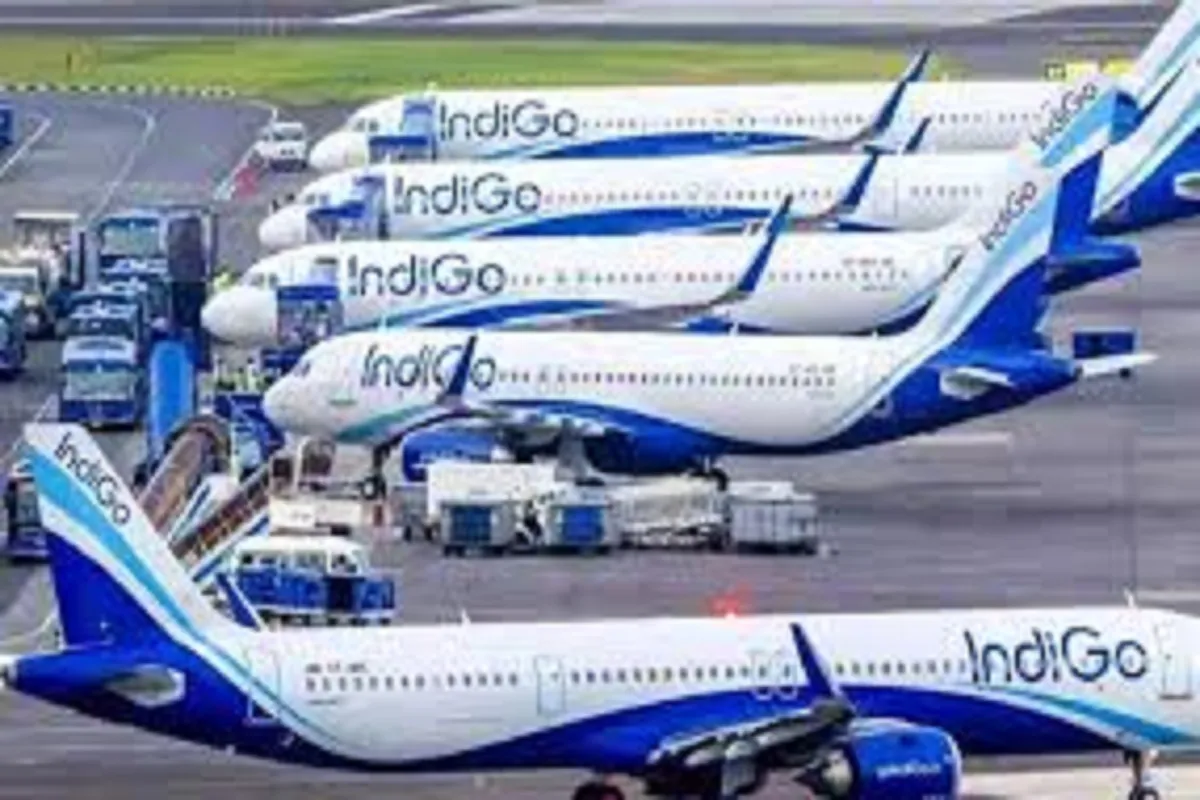
IndiGo airline's monopoly in the aviation sector has now come under scrutiny. The Competition Commission of India (CCI), the country's fair trade watchdog, is investigating whether the country's largest airline has violated competition rules to maintain its dominant position.
The IndiGo crisis is being considered a clear violation of Section 4 of the Competition Act. According to this section, no company can charge arbitrary prices based on its dominant position or arbitrarily operate services to the detriment of customers.
The Competition Commission is internally investigating several aspects of IndiGo's monopoly, including its dominance on specific routes and potential abuse of its market power. If the allegations of price gouging are substantiated, the commission will order a formal investigation.
Meanwhile, an IndiGo spokesperson stated on Saturday that they are compiling a list of flights from December 3rd, 4th, and 5th that caused significant inconvenience to passengers and left them stranded at airports. All passengers on these flights will be contacted directly in January to facilitate compensation.
IndiGo appoints international expert to investigate the crisis
A severe shortage of crew members at IndiGo in the first week of December, due to changes in aviation regulations by the Directorate General of Civil Aviation (DGCA), led to the cancellation of over 5,000 IndiGo flights between December 1st and 10th.
IndiGo has decided to entrust the internal investigation of the matter entirely to an international expert. CEO Pieter Elbers appeared before the DGCA committee on Friday. The company had already appointed world-renowned aviation expert Captain John Ilson to conduct an independent investigation.
This move indicates that the airline is under pressure to conduct a thorough review of its operational model and management processes. Ilson has led top global institutions for four decades. The appointment was made on the recommendation of the IndiGo board's Crisis Management Group. Four Flight Operations Inspectors Dismissed
The DGCA has dismissed four IndiGo flight operations inspectors – Rishi Raj Chatterjee, Seema Jhamnani, Anil Kumar Pokhriyal, and Priyam Kaushik. These officers were responsible for monitoring the airline's safety and operational compliance.
DGCA Changes Surveillance Rules
Amidst increasing incidents of flight delays, congestion, staff shortages, and operational disruptions across the country, the DGCA has ordered a complete overhaul of its surveillance system. The order was implemented immediately on Friday.
For the first time, the DGCA has implemented such a comprehensive and on-the-ground inspection mechanism as a standardized procedure. This will increase accountability and transparency for both airport operators and airlines. Key points of the 12-page new order:
All DGCA inspection teams will now be required to spend a minimum of 7 hours at airports during their regular inspection visits and assess operational readiness in real-time.
The DGCA has also mandated a special 32-point Airport Inspection Checklist for the new surveillance system, which every inspection team must fill out and send to headquarters within 48 hours.
Now, any scheduled flight delayed by 15 minutes or more due to technical reasons will be subject to mandatory investigation. The company will have to explain the reason for the delay, how it was rectified, and what measures were taken to prevent recurrence. These provisions were not in place before.
The company must immediately inform the DGCA by phone of any ‘major defect’. A detailed report must be submitted within 72 hours. If a defect is repeated three times, it will be considered a ‘repetitive defect’, and a separate special investigation will be initiated.
What will be checked during inspections...
Under the new protocol, detailed inspections will be conducted in critical areas such as licensing compliance, training records, duty rosters, fatigue management, staff availability, ground handling operations, Safety Management System (SMS), risk assessment, ramp safety, and emergency response. Services such as crowd control, management of check-in and security queues, help desks, information dissemination, drinking water, seating arrangements, baggage delivery, and assistance for passengers with special needs will be assessed on-site.