

The complex and highly emotional saga surrounding the Iranian women's national football team has taken another dramatic turn. Three more members of the squad, who had initially accepted humanitarian refugee visas to remain in Australia, have abruptly reversed their decision. They have opted to board flights back to their homeland, leaving just four team members behind in Sydney under the protection of the Australian government.
This unexpected reversal highlights the immense psychological and political pressure placed on the athletes, who find themselves caught between fears for their own safety and profound concerns for the families they left behind in Iran.

The Catalyst: A Silent Protest
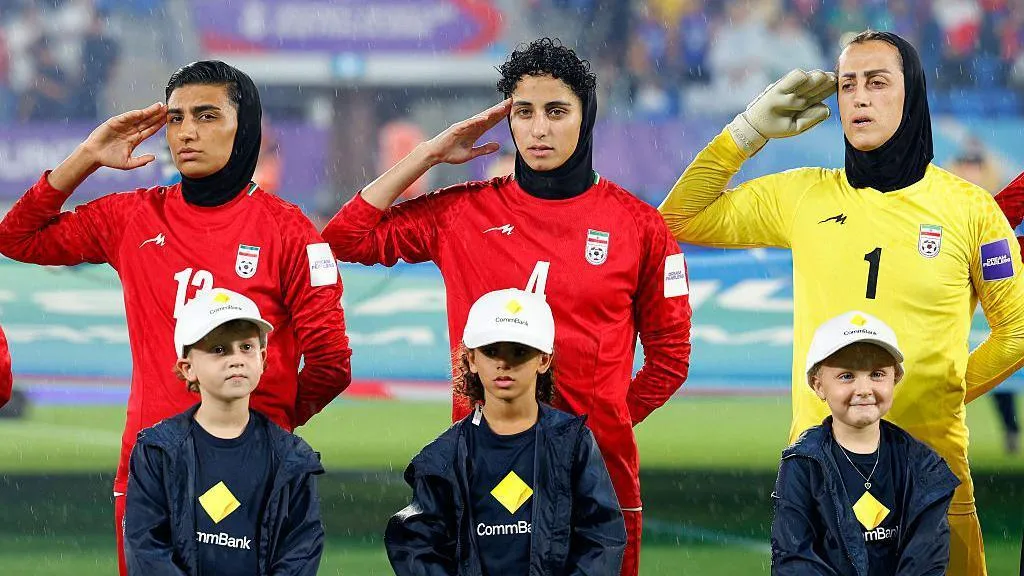
The sequence of events began last month when the 26-member Iranian squad arrived in Australia to compete in the Women's Asian Cup. Against the backdrop of escalating military conflict in the Middle East, the team drew global attention before their opening match against South Korea. In a powerful, silent protest, several players refused to sing the Iranian national anthem.
This act of defiance was met with immediate and fierce backlash back home. Iranian state media commentators and hardliners branded the silent players as "wartime traitors," publicly demanding that they face severe punishment upon their return. Under Iranian law, charges of treason or corruption carry harsh penalties, sparking widespread international fear for the women's safety.
International Intervention and Asylum Granted :
As the team's elimination from the tournament loomed, advocacy groups and the international community mobilized. High-profile political figures, including U.S. President Donald Trump, publicly urged Australian Prime Minister Anthony Albanese to grant the women asylum, warning that they would likely face imprisonment or worse if forced to return to Tehran.
Acting swiftly, the Australian government, coordinated by Home Affairs Minister Tony Burke and the Australian Federal Police, extracted several players from their Gold Coast hotel in the dead of night. They were taken to a secure location where they were offered, and initially accepted, humanitarian visas. At the time, officials noted the visible joy and relief among the players who chose to stay.
The U-Turn: Choosing to Return Home
Despite the guarantee of a safe haven, the emotional toll of defection proved overwhelming. Overnight, three members of the group—reportedly two players and one support staff member—made the agonizing decision to revoke their refugee status and join the rest of the departed squad on their journey back to Iran via Malaysia.
Australian officials handled the departure with caution. Home Affairs Minister Tony Burke confirmed that the three individuals were given "repeated chances to talk about their options" and were fully briefed on the potential risks before they finalized their decision to leave.
"While the Australian government can ensure that opportunities are provided and communicated, we cannot remove the context in which the players are making these incredibly difficult decisions," Burke stated, acknowledging the likelihood that threats to their families back in Iran played a massive role in their choice.
The Reaction from Tehran :
The Iranian government has actively capitalized on the players' return. State-run news agencies described the departure of the three women from Australia as a "disgraceful failure of the American-Australian project." Iranian officials, including the First Vice President, have publicly guaranteed the players' security, insisting that Iran "welcomes its children with open arms." However, human rights advocates remain deeply skeptical of these assurances, given the regime's history of penalizing dissidents and athletes who protest on the world stage.
The Remaining Four: What Lies Ahead
With these latest departures, only four members of the original deflecting group remain in Sydney. These athletes are currently living in undisclosed, secure locations as they begin to navigate their new lives as refugees in Australia. The Australian government has reiterated its commitment to supporting them, providing pathways to live, study, and work in the country safely.
For the four women who stayed, the courage to seek a new life comes at the devastating cost of exile. Meanwhile, the international sporting community holds its breath, watching closely to see what fate awaits the players who have chosen to walk back into the storm.