


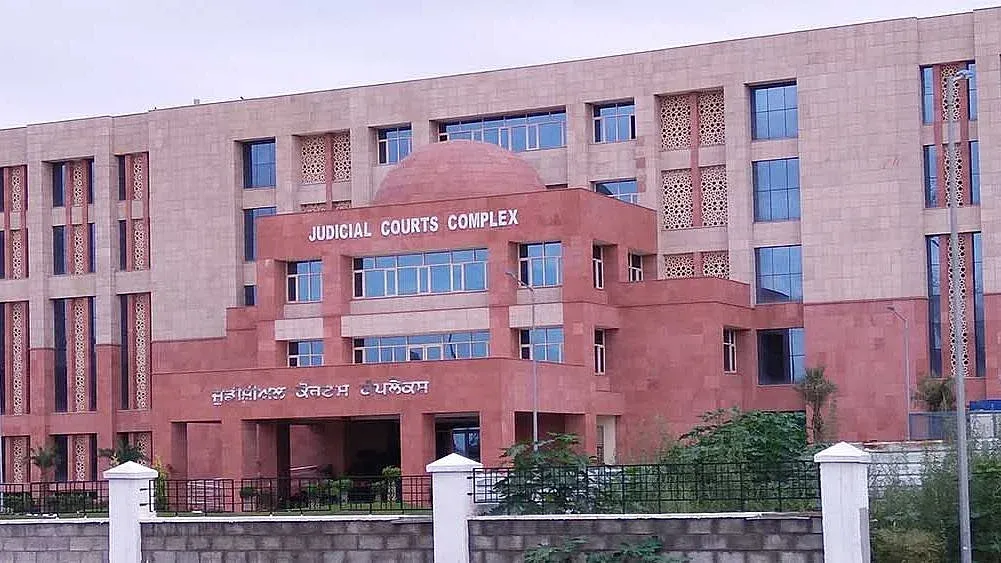
The judiciary has once again taken a strict stance toward maintaining peace and law and order in Punjab. A local court in Mohali has outrightly rejected the bail plea of two accused associated with the banned terrorist organization Khalistan Liberation Force (KLF). The court made it clear in its decision that the charges against the accused are of a very serious nature, and if they are granted bail at this stage, they might attempt to intimidate witnesses and tamper with evidence. This decision is being considered a major legal blow against the active terror sleeper cells and weapons smuggling networks in Punjab.
Court's Strict Remarks: 'National Security is Paramount'
While hearing the bail plea, the Mohali Court judge underlined the severity of the matter. The court agreed with the arguments of the Prosecution, which stated that the accused are not ordinary criminals, but are part of a banned organization (KLF) that is a direct threat to the sovereignty and integrity of the country.
In his order, the judge primarily emphasized the following points:
-
Apprehension of Tampering with Evidence: The court stated that the accused could be part of a larger criminal and terrorist network. Upon coming out, they could influence the police investigation and destroy crucial evidence.
-
Serious Charges and Recovery of Weapons: The accused were caught red-handed with a large cache of illegal weapons and ammunition. The court considered that the recovery of such a large number of weapons points towards a major terror plot.
-
Safety of Witnesses: In such cases, witnesses often live under the shadow of fear. The court acknowledged that considering the criminal history of the accused and the nature of their organization, there could be a threat to the lives of the witnesses.
Background of the Arrest: Caught with a Cache of Weapons
These two accused were arrested some time ago during a joint operation by the Punjab Police's Special Task Force (STF) and intelligence agencies. The police had received secret information that some KLF operatives were going to receive a consignment of weapons from across the border and were plotting to carry out a major incident in the state.
-
Blockade and Arrest: The police had intercepted a suspicious vehicle during a special blockade. During the search, sophisticated foreign pistols, magazines, and a large quantity of cartridges were recovered from inside the vehicle.
-
Suspicion of Weapons Smuggling via Drones: Initial investigations revealed that these weapons were dropped into Indian territory via drones by handlers based in Pakistan. The job of the accused was to transport these weapons to safe locations and further distribute them to sleeper cells.
Arguments of Both Sides in Court
-
Arguments of the Defense: The counsel for the accused argued in court that their clients had been falsely implicated by the police in a fabricated case. They claimed that the recovery of weapons shown by the police is concocted and no direct link of the accused with KLF or any other terrorist organization has been proven. The defense pleaded for bail citing Article 21 of the Constitution (Protection of Life and Personal Liberty).
-
Strong Opposition by the Prosecution: Strongly opposing the bail plea, the public prosecutor presented the police charge sheet and intelligence reports before the court. The prosecution argued that:
-
Several foreign numbers have been found on the mobile phones of the accused, which are directly linked to KLF handlers sitting abroad.
-
The weapons recovered from the accused are not generally possessed by local criminals, but are specifically sent from across the border for terrorists.
-
If they get bail, they might flee the country or become active in their terrorist activities again, which could increase incidents like "target killings" in the state.
-
The Growing Threat of the Khalistan Liberation Force (KLF)
The Khalistan Liberation Force (KLF) is a banned terrorist organization under the Unlawful Activities (Prevention) Act (UAPA) by the Government of India. This organization was highly active during the terrorism in Punjab in the 1980s and 90s. In recent years, at the behest of Pakistan's intelligence agency ISI, handlers of this organization sitting abroad (especially in Canada, the UK, and Germany) are trying to revive terrorism in Punjab.
Nowadays, KLF's strategy has changed. Instead of direct large-scale attacks, they are working on disrupting communal harmony in the state, carrying out 'target killings' of prominent leaders, and brainwashing the youth in collusion with gangster networks. In such a scenario, the arrest of any operative associated with KLF and keeping them behind bars is a major success for the police.
Impact on Law and Order in Punjab
This decision by the Mohali Court will boost the morale of the Punjab Police and central agencies like the National Investigation Agency (NIA). The message is clear that the judiciary is in no mood for leniency in matters related to terrorism and state security.
Recently, the Punjab Police has launched a massive 'crackdown' to break the nexus of gangsters and terrorists. Stopping weapons smuggling and neutralizing sleeper cells has become the top priority of the government. The rejection of the bail plea by the Mohali Court has ensured that the police will get ample time to complete their further investigation without any external pressure or witnesses being influenced. Now, by taking these accused on remand, the police will try to expose their financial network (terror funding) and other associates.
Conclusion: Overall, this decision by the Mohali Court is not only important from a legal perspective, but it also sends a strong message to society that the justice system stands firmly against anti-national forces. It will now be crucial to see what further major revelations the police make in their final charge sheet in this case.
3.png)
3.png)
2.png)
2.png)

1.png)
2.png)