

The Karnataka government released a draft policy on Tuesday regarding the digital usage of students in grades 9 through 12. The policy recommends that, aside from academic purposes, daily screen time for entertainment be capped at one hour. It also recommends that internet access be switched off after 7:00 PM.
The draft states that students should be kept away from screens for at least one hour before bedtime. A ‘Child Plan’ for mobile devices has been proposed, which would include an ‘audio-only’ option and a mechanism to disable internet access after a designated time. The policy also suggests developing devices and operating systems tailored to specific age groups.
According to the government, approximately 25% of adolescents suffer from internet addiction, leading to issues such as sleep deprivation, anxiety, and a lack of concentration. This policy has been introduced specifically to address these concerns.
**Changes in Schools:** Digital well-being and online safety will become integral parts of the curriculum. Topics such as cyberbullying, privacy, and responsible online behavior will be taught. Every school will be required to implement a digital usage policy. Schools will observe ‘Digital Detox Days’ and designate ‘Tech-Free Periods.’ School diaries, rather than WhatsApp, will be adopted as the primary medium for communication with students.
**Focus on Mental Health:** Counseling services within schools will be strengthened, and teachers will receive training to help them identify signs of digital addiction and refer students to specialists when necessary.
**Defined Roles for Teachers and Parents:** Teachers will monitor students' digital behavior and provide guidance. Parents will be responsible for setting screen time limits at home, establishing ‘no-phone zones,’ and leading by example.
**Guidelines on AI Usage:** Schools will formulate rules regarding the use of Artificial Intelligence (AI), regulate its application in homework assignments, and develop systems to prevent academic plagiarism.
**Draft Prepared in Collaboration with Multiple Institutions**
This policy draft has been jointly prepared by the Department of Health and Family Welfare, the Karnataka State Mental Health Authority, NIMHANS, and the Department of Education. This proposal is distinct from the announcement made by Chief Minister Siddaramaiah in his budget speech on March 6, which called for stricter regulations regarding social media usage among children under the age of 16. On March 6, the Karnataka Government Imposed a Ban on Children's Social Media Usage
On Friday, the Karnataka government announced a ban on the use of social media for children under the age of 16. Karnataka is the first state in the country to take such a step.
During his budget speech, Chief Minister Siddaramaiah stated that the usage of mobile phones and social media among children is rising rapidly, which is having a detrimental effect on them.
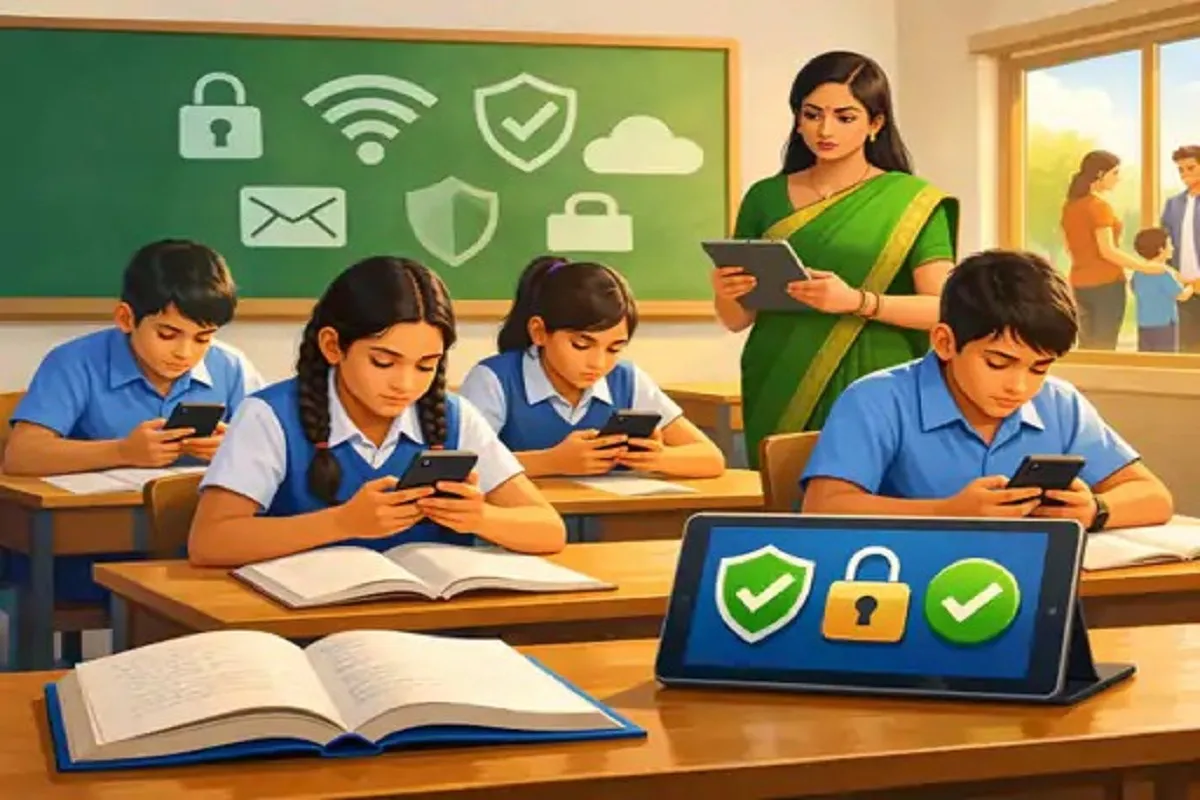
Age Verification Will Be Mandatory
The proposal to ban social media for children under 16 is also linked to data protection legislation—specifically, the Digital Personal Data Protection Act, 2023 (DPDP) and the Personal Data Protection Rules, 2025.
Under these regulations, children will be required to obtain parental consent and undergo age verification before creating a social media account. Government-issued identity systems or digital lockers may be utilized for this purpose.
Greater Inclination Towards Social Media During Teenage Years
During the teenage years, 'social validation' holds immense significance. Social media provides teenagers with a platform where they can forge their own identities and share their interests with the world. For them, it is not merely a source of entertainment, but a virtual realm where they explore their sense of self.
Furthermore, the instant feedback received on these platforms—in the form of likes, comments, and views—reinforces the feeling that they are being seen by others and that their presence matters. There may be various underlying reasons for teenagers' strong attraction to social media.