


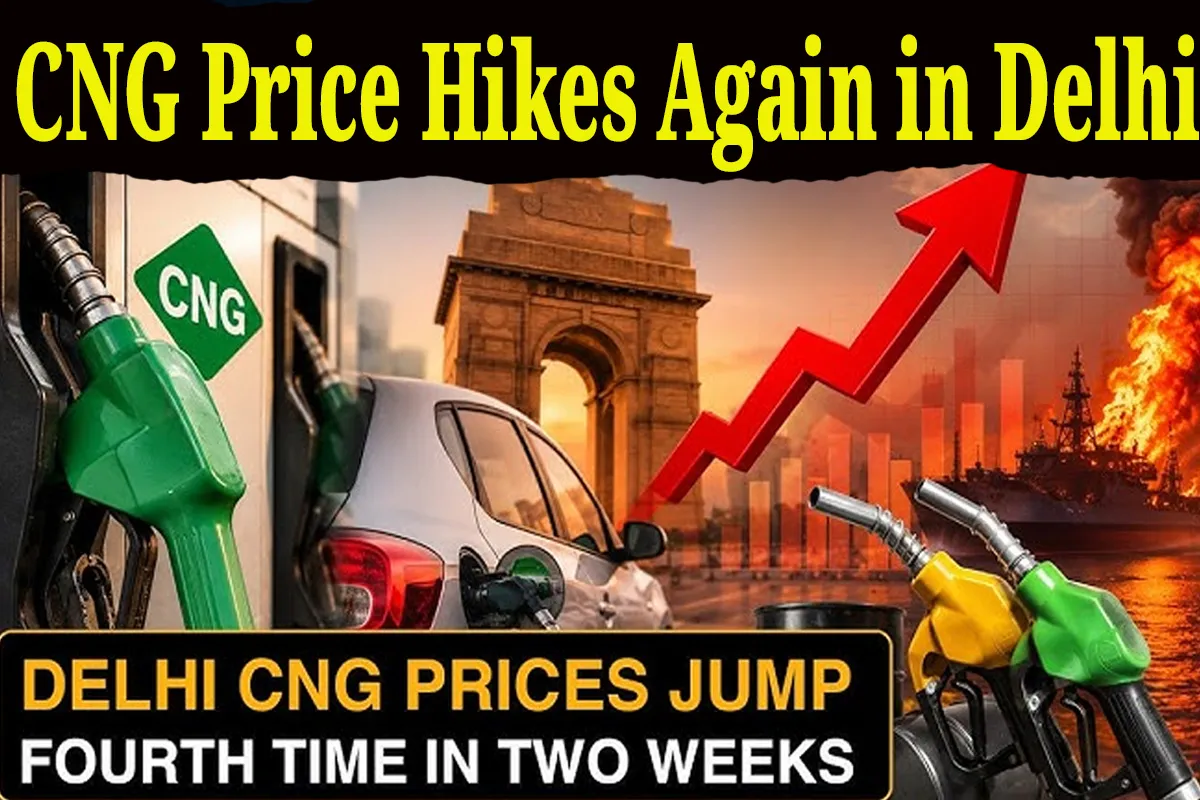
NEW DELHI — Consumers and public transport operators in the National Capital Territory (NCT) of Delhi woke up to another financial jolt this morning as city gas distributors announced a fresh increase in fuel rates. Effective from 6:00 AM today, the price of Compressed Natural Gas (CNG) has been raised by ₹2 per kilogram.
With this latest revision implemented by Indraprastha Gas Limited (IGL), the retail price of CNG in Delhi has climbed to ₹83.09 per kg. This marks the fourth upward price revision in less than two weeks, highlighting the intense pressure mounting on the domestic energy sector due to global supply chain disruptions.
A Steep Climb: Four Revisions in 11 Days
The latest hike is part of a series of rapid adjustments that began mid-month. Prior to May 15, CNG prices in the national capital had been holding steady at a baseline of ₹77.09 per kg. However, volatile geopolitical factors have forced a series of consecutive hikes that caught commuters off guard.
The timeline below illustrates the sequential multi-step price hikes over the last 11 days:
Prices were increased by ₹2.00 per kg, shifting the retail price from ₹77.09 to ₹79.09 per kg.
A steady bump of ₹1.00 per kg was introduced, raising the cost further to ₹80.09 per kg.
The retail price went up by another ₹1.00 per kg, pushing the price to ₹81.09 per kg.
The latest adjustment added ₹2.00 per kg, arriving at the current rate of ₹83.09 per kg.
The cumulative effect of these four tranches amounts to a total increase of ₹6.00 per kg in less than a fortnight, triggering intense concerns over retail inflation and household budgets.
Regional Breakdown: How Surrounding Cities Fare
The impact of IGL’s price adjustments is not restricted to the borders of Delhi alone. Neighboring areas across the National Capital Region (NCR), including Uttar Pradesh and Haryana, have observed matching or even steeper price scales due to varied local state taxes.
The Core Driver: Geopolitical Unrest and Supply Squeezes
While city gas distributors like IGL have historically absorbed minor changes in domestic production, the severity of current international trends has left them with little choice but to pass the burden onto end consumers.
According to energy industry sources, the relentless rise in input gas costs is tied directly to escalating geopolitical friction in West Asia. Specifically, escalating conflicts surrounding the Strait of Hormuz—a key global maritime shipping lane responsible for roughly one-fifth of the world’s oil and liquefied natural gas (LNG) transit—have caused severe supply anxieties.
Brent crude oil has registered dramatic volatility, bouncing to nearly $86 per barrel from its previous lower baseline of $72 recorded earlier this year. Combined with a steep appreciation of the US Dollar (USD) against the Indian Rupee (INR), importing natural gas has become significantly more expensive for state retailers.
Broader Impact on Daily Commuters and Public Transport
The dual pinch of multi-tiered price hikes has cast a shadow over public transport operators. Auto-rickshaw, taxi, and commercial bus unions in Delhi have expressed deep distress over the situation, warning that their daily profit margins have virtually collapsed.
"We switched to CNG because it was promoted as an affordable and eco-friendly alternative to petrol and diesel," stated an auto-driver association representative. "With a ₹6 jump in a single week, our daily operational cost increases significantly. If this doesn't halt, fares will have to go up, hurting the common citizen."
The problem is further amplified as standard fuel prices see structural corrections. Just yesterday, state-owned fuel retailers bumped up petrol and diesel prices by ₹2.61 and ₹2.71 per litre respectively across Delhi, resulting in an aggregated transport cost inflation spike that is expected to reflect across essential commodities soon.




.png)
.png)