


A spectacular yet terrifying atmospheric event unfolded across western and northern Rajasthan as a massive, towering sandstorm (locally known as an Aandhi) swept through at least five major districts. The severe weather event, fueled by an intense western disturbance, effectively blocked out the sun, plunging multiple cities and rural belts into pitch-black darkness during the middle of the day. Normal life ground to an abrupt halt as visibility dropped to zero within minutes, forcing vehicles to halt on highways and residents to flee indoors.
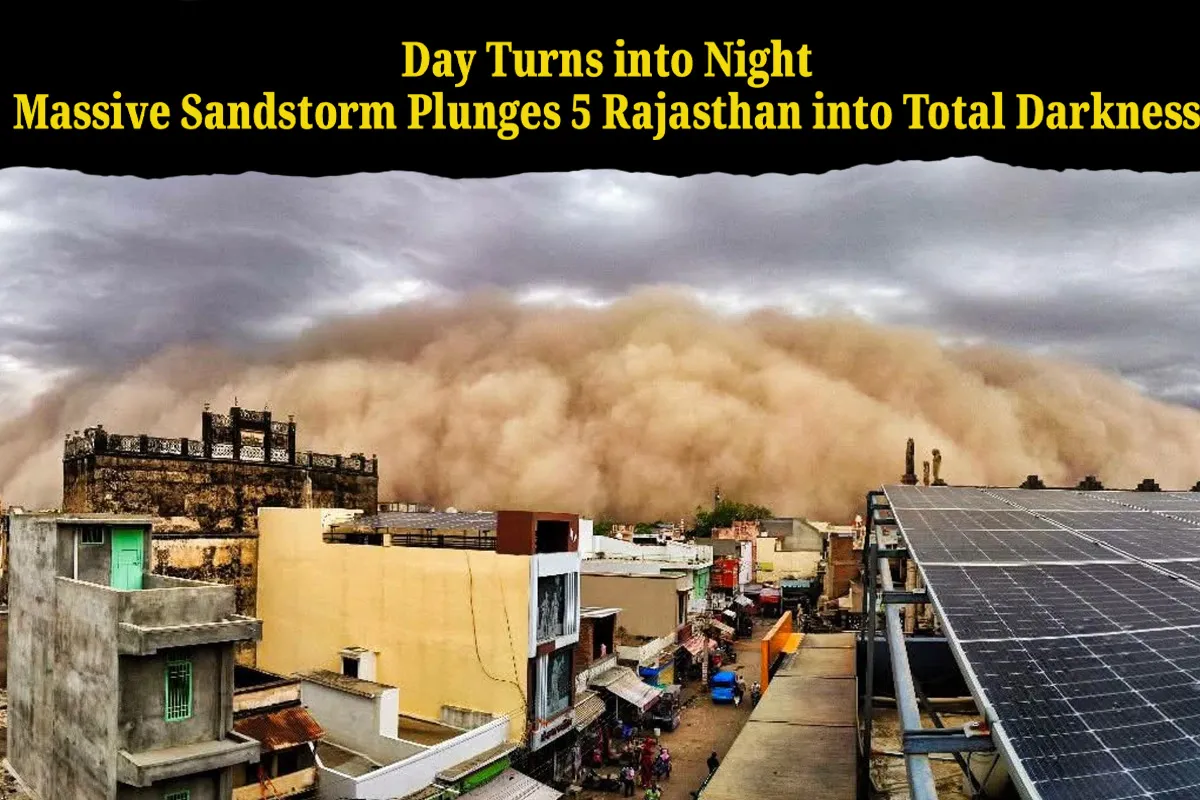
What to look for in the visual: Notice the colossal, dense wall of dust completely swallowing the horizon. The sheer vertical scale of the sand cloud completely eclipses the sky, showing how daylight was entirely choked out within moments of the storm's arrival.
The Epicenter: Five Affected Districts Face Nature's Fury
The multi-district weather onslaught primarily targeted Churu, Bikaner, Sri Ganganagar, Jaisalmer, and Barmer. According to local reports, a massive wall of dark yellow and black dust originated from the core Thar Desert region and rapidly gained momentum. Within a span of less than thirty minutes, the fast-moving wall of sand blanketed entire skylines.
Towns like Churu experienced a dramatic atmospheric shift where the bright summer sky turned an ominous shade of amber before going completely dark. In Bikaner’s Mahajan region and the border areas of Jaisalmer, the sheer volume of swirling sand reduced visibility to absolute zero meters, leaving residents stunned by the speed of the onset.
Day-Time Darkness and High-Speed Winds
The defining characteristic of this severe storm was the instant transition from afternoon daylight to night-like conditions. As the sandstorm reached its peak intensity, high-speed winds ranging between 60 km/h and 70 km/h whipped across the terrain.
"The sky didn't just turn cloudy; it went entirely dark as if night had fallen at 3:00 PM. We had to turn on all our house lights and vehicle headlights just to see a few inches ahead," remarked a local shopkeeper from Barmer.
Pedestrians struggled to breathe due to the heavy particulate matter suspended in the air. The sudden lack of visibility forced ongoing traffic to park by the roadsides with emergency hazard indicators turned on, transforming busy state highways into eerie standstills.
Heavy Damage to Infrastructure and Lifelines
The brutal combination of sand, high-speed winds, and subsequent heavy downpours with localized hailstorms left a trail of destruction behind:
-
Power Grid Collapses: Hundreds of electricity poles and transmission lines were snapped or uprooted by the sheer velocity of the wind, causing massive power outages across Bikaner, Sri Ganganagar, and nearby districts.
-
Property Damage: Tin roofs, metal sheds, and large solar panel arrays were ripped off residential and commercial structures.
-
Uprooted Trees: Massive trees fell onto stationary vehicles and blocked key transit roads, creating major traffic bottlenecks.
-
Water Disruptions: The fierce weather also triggered complications in water supply lines, with significant leaks reported in key regional distribution pipelines due to ground shifts and storm pressures.
Weather Bureau Explains the Science Behind the Storm
The India Meteorological Department (IMD) explained that the rare intensity of this sandstorm—often structurally compared to a Middle Eastern Haboob—was driven by a potent western disturbance intersecting with easterly winds coming from the Bay of Bengal. Intense summer heat waves over the preceding days had superheated the desert floor, making the lower atmospheric air highly unstable. When cold air plunged down from sudden storm clouds, it acted like a giant broom, scooping millions of tons of dry, loose desert soil into a massive moving wall.
While the storm caused widespread disruption and property damage, it brought a sudden drop in temperatures. Most districts saw an immediate 2°C to 3°C drop, providing temporary respite from the ongoing scorching heatwave. The IMD warns that unstable weather conditions, including erratic thunderstorms and lighter dust storms, are expected to persist across Rajasthan over the next few days.