

TEHRAN :
In a bizarre escalation of wartime rhetoric, a senior Iranian official has publicly alleged that remnants of the late financier Jeffrey Epstein’s network are orchestrating a "9/11-style" terror attack on American soil with the explicit goal of framing Iran.
Ali Larijani, a prominent political figure, former parliamentary speaker, and key advisor to Iran’s Supreme Leader Ayatollah Ali Khamenei, made the unsubstantiated claim on the social media platform X. The statement arrives against a backdrop of rapidly deteriorating security conditions in the Middle East, representing a highly unusual convergence of international military geopolitics and Western internet conspiracy theories.
"I've heard that the remaining members of Epstein's network have devised a conspiracy to create an incident similar to 9/11 and blame Iran for it," Larijani wrote in his post. He further emphasized that Tehran "fundamentally opposes any such terrorist plots," adding pointedly that Iran's "war is not with the American citizens."
A Deepening Crisis and Information Warfare :
Larijani’s comments come at a moment of unprecedented tension. The Middle East is currently witnessing severe military escalations, with Israeli and U.S. forces engaged in active and ongoing hostilities against Iranian military assets and their regional proxy networks. In the fog of this wider conflict, information warfare has become a critical, parallel front.
By pre-emptively denying involvement in a hypothetical future attack, Iranian officials appear to be aggressively attempting to control the global narrative. Security analysts suggest that Larijani's statement is designed to accomplish two strategic goals. First, it attempts to insulate Tehran from potential international backlash should any independent militant group strike U.S. interests. Second, by directly addressing the American public and insisting that Iran holds no animosity toward them, Tehran is attempting to drive a psychological wedge between American citizens and the political establishment directing the current war efforts.
The 'Epstein' Element :
The most striking and unorthodox element of Larijani’s declaration is his specific invocation of the "Epstein network." Jeffrey Epstein, an American financier and convicted sex offender, died in a New York jail cell in 2019 while awaiting federal sex trafficking charges. Because Epstein associated with high-profile global elites—including politicians, business leaders, and celebrities—his life and death have spawned countless unverified conspiracy theories.
Typically, these theories center on a shadowy "deep state" or a global blackmail ring. However, it is highly anomalous for a senior Iranian diplomat to leverage this specific, America-centric true-crime narrative. Experts in international relations and disinformation note that authoritarian states often co-opt Western conspiracy theories to legitimize their own geopolitical claims. By invoking a universally recognized "villainous" network like Epstein's, Larijani is attempting to tap into existing anti-establishment sentiment within the United States, utilizing familiar, emotionally charged buzzwords to sow doubt and confusion.
There is no intelligence or credible evidence provided by Larijani—nor recognized by any international security agency—to support the claim that associates of a deceased sex trafficker are capable of, or interested in, executing a mass-casualty terrorist event akin to the September 11, 2001 attacks.
Evolution of Propaganda :
Historically, when attempting to deflect blame or explain regional hostilities, Iranian officials have routinely pointed the finger at traditional state adversaries, namely the CIA, Israel’s Mossad, or Britain’s MI6. The shift toward naming a decentralized, culturally specific Western bogeyman signifies a potential evolution in Tehran's propaganda apparatus. It suggests a keen awareness of American domestic discourse and a willingness to weaponize hyper-partisan internet lore.
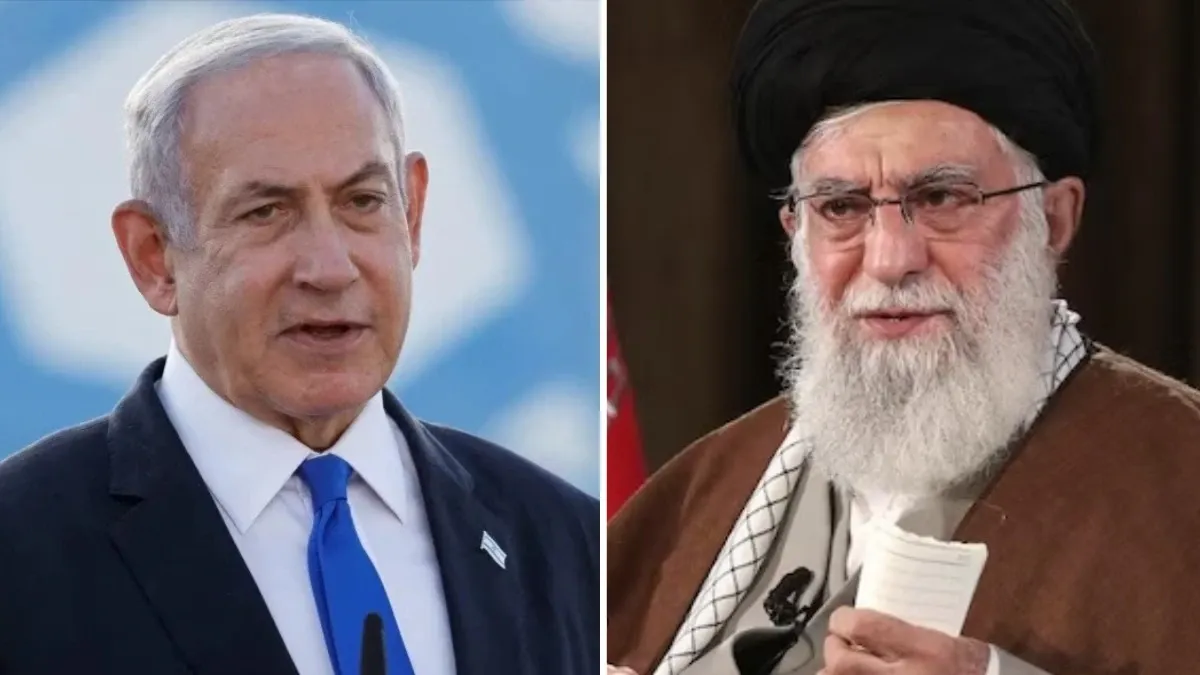
U.S. State Department officials and Western intelligence agencies routinely dismiss such claims from Tehran as state-sponsored psychological operations. Washington has long maintained that Iran acts as the world's leading state sponsor of terrorism, heavily funding and directing proxy militias across Iraq, Syria, Lebanon, and Yemen.
As kinetic military strikes intensify, the battle for public perception remains equally fierce. Larijani's post stands as a textbook example of asymmetric information warfare: floating a sensational, untestable conspiracy theory that forces adversaries to expend energy debunking it. While the threat of a "9/11-style" attack manufactured by a shadow cabal remains firmly in the realm of fiction, the very real dangers of the ongoing Middle Eastern conflict continue to ripple outward, bringing unpredictable challenges to the global stage.