


In a Cabinet meeting held on Wednesday under the chairmanship of Prime Minister Narendra Modi, the draft bill to amend the 'Nari Shakti Vandan Adhiniyam' (Women's Reservation Act) was approved. Under this proposal, the number of seats in the Lok Sabha will be increased from the current 543 to 816, of which 273 seats will be reserved for women.
Extending the Budget Session, the government has convened a special session of Parliament from April 16 to 18, during which this amendment bill is likely to be passed. Once approved by Parliament, this law will come into effect on March 31, 2029, and will be implemented for the first time in the Lok Sabha elections held that same year.
According to the proposal, the reservation will be implemented on a 'vertical' basis; that is, a specific share for women will also be earmarked within the seats reserved for Scheduled Castes and Scheduled Tribes.
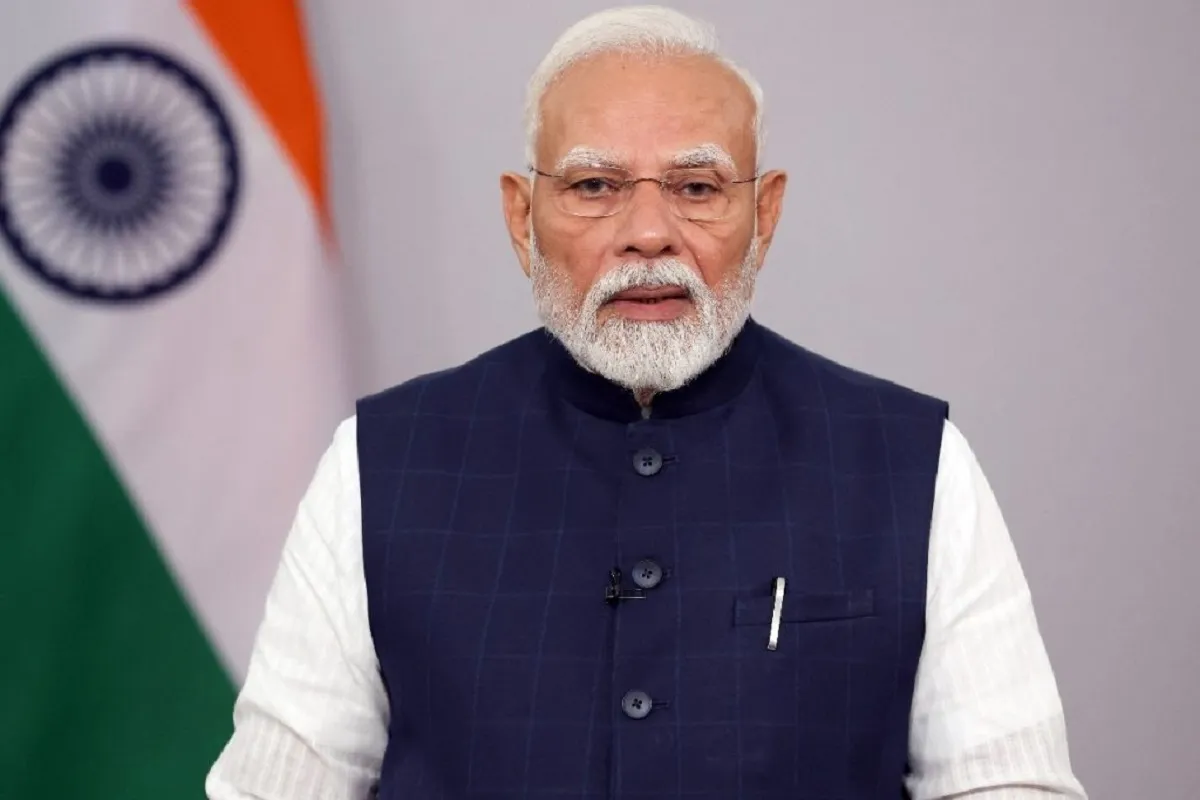
Regarding this bill, PM Modi has published an article on his website, in which he writes that the proposed changes to the Women's Reservation Act are not merely a legislative exercise, but rather a reflection of the hopes and aspirations of crores of women across India.
He appealed to all Members of Parliament to come together in support of this initiative, stating: "Parliament must rise above party lines and stand united in support of this significant step for the women of India."
Modi's Article in 5 Points...
Over the past several decades, repeated efforts have been made to secure a rightful place for women within democratic institutions. Committees were constituted, and draft bills were introduced, yet they could never be passed.
This is a moment that can no longer be deferred. Any delay in advancing women's representation is, in essence, a delay in strengthening the quality of our democracy and its inclusive character.
If we continue to postpone this, it would imply that we are prolonging an imbalance that we both acknowledge and possess the capacity to rectify.
Consensus is vital for the passage of the Women's Reservation Bill. It must be viewed through the prism of the larger national interest. Such occasions serve as a reminder that certain decisions transcend their immediate times; they chart the course for future generations. India has always demonstrated that when matters of national importance arise, it can rise above differences and act with unity. This, too, is one such moment.
**Government to Introduce a Separate Bill to Amend the Delimitation Act**
Seats in the State Legislative Assemblies will also be reserved in the same proportion. Alongside a Constitutional Amendment Bill, the government will also introduce a separate ordinary bill to amend the Delimitation Act, thereby enabling a fresh determination of seats.
The allocation of new seats may be based on the 2011 Census rather than the 2027 Census. This legislation will be applicable to State Legislative Assemblies as well as Union Territories such as Delhi, Jammu & Kashmir, and Puducherry.
**Uttar Pradesh to See the Highest Increase of 40 Seats Following Women's Reservation**
According to media reports, Uttar Pradesh will witness the largest increase—40 seats—in the Lok Sabha following the implementation of women's reservation. The total number of seats will rise from 80 to 120. In Maharashtra, 24 seats will be reserved for women; here, the total number of Lok Sabha seats will increase from 48 to 72.
According to reports, the number of seats reserved for women in Bihar could reach 20, with the total number of seats in the state potentially rising from 40 to 60. In Madhya Pradesh, the number of reserved seats for women could increase by 15. Tamil Nadu is expected to have 20 reserved seats for women, and Delhi is expected to have 4. In Jharkhand, an increase of 7 reserved seats for women is projected.
**The Issue of Women's Reservation Was First Raised in 1931**
**1931:** During the Indian National Movement, the issue of women's reservation was discussed for the first time; however, the proposal was ultimately rejected. Leaders such as Begum Shah Nawaz and Sarojini Naidu emphasized the demand for equal political status for women, rather than seeking preferential treatment over men.
**1971:** A Committee on the Status of Women in India was constituted. Several of its members opposed the reservation of seats for women in legislative bodies.
**1974:** To enhance women's representation, the Committee on the Status of Women submitted a report to the Ministry of Education and Social Welfare. It recommended the implementation of reservations for women in Panchayats and municipal bodies.
1988: The National Perspective Plan recommended providing reservations for women ranging from the Panchayat level up to the Parliament. It laid the foundation for the 73rd and 74th Constitutional Amendments, which mandated a one-third reservation for women in Panchayati Raj Institutions and urban local bodies across all states.
1993: The 73rd and 74th Constitutional Amendments reserved one-third of the seats for women in Panchayats and municipal bodies. Several states—including Maharashtra, Andhra Pradesh, Bihar, Chhattisgarh, Jharkhand, and Kerala—have implemented a 50% reservation for women in local bodies.
2.png)
3.png)
3.png)
2.png)
2.png)