


WASHINGTON — In a surprising turn for the American economy, U.S. nonfarm payrolls contracted unexpectedly in July, with employers shedding 23,000 jobs. The slump represents a sharp deviation from consensus forecasts that had anticipated an addition of roughly 80,000 to 88,000 positions for the month.
Despite the net job losses, the national unemployment rate edged down slightly to 4.1% from 4.2% in June. However, economists note that this dip in joblessness was largely driven by a shrinking labor force rather than organic hiring momentum.
July Employment Report
-
Payrolls Decline: U.S. employers cut a net 23,000 positions in July.
-
Downward Revisions: May and June payroll additions were retroactively slashed by a combined 103,000 jobs. May gains were adjusted from 129,000 down to 63,000, while June was trimmed from 57,000 to 20,000.
-
Unemployment Rate: Dropped to 4.1%, beating estimates of 4.2%.
-
Labor Force Participation: Ticked down to 61.4% from 61.5% in June, reflecting fewer overall job seekers in the market.
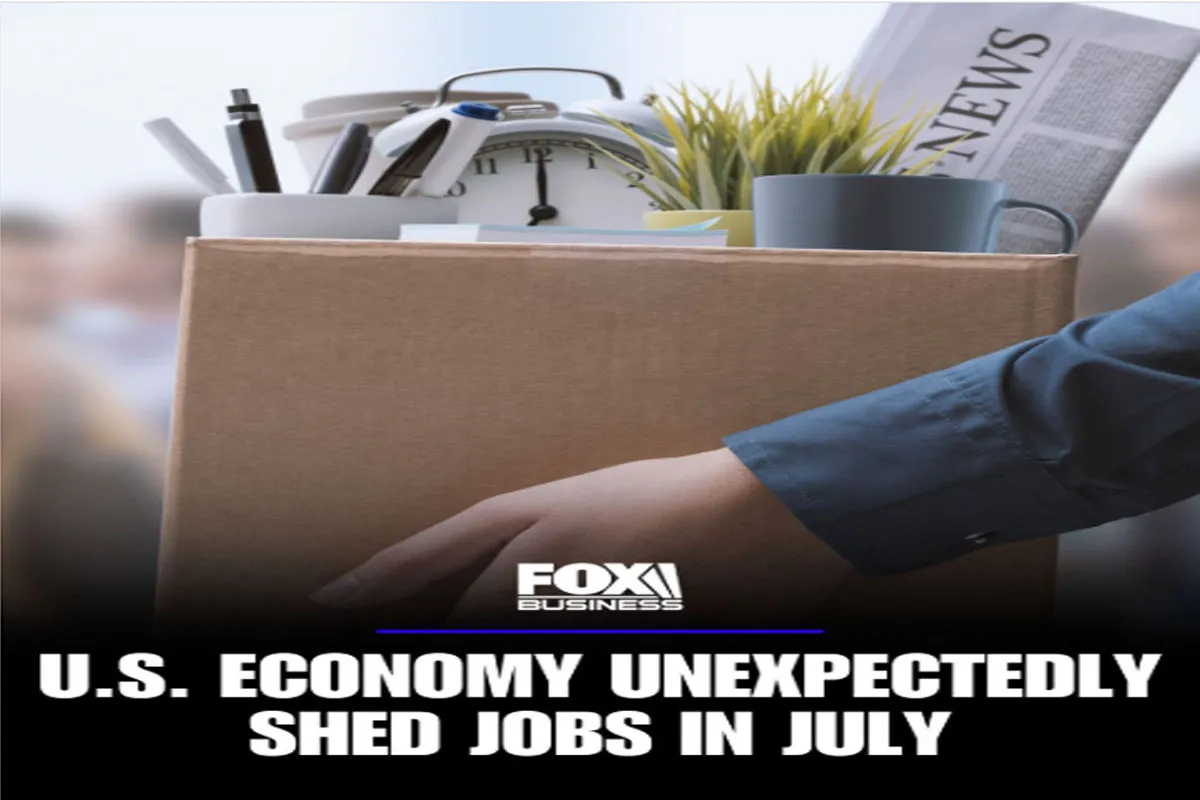
Shrinking Labor Force Masks Broader Weakness
The drop in the headline unemployment rate to 4.1% initially presents a paradoxical picture alongside headline job losses. However, labor market analysts point out that the rate fell primarily because thousands of individuals exited the active workforce entirely, lowering the labor participation rate to 61.4%. Under standard BLS methodology, individuals who are not actively seeking employment are not counted toward the unemployment total.
The massive downward revisions to May and June figures further signal that the underlying momentum in the labor market had been slowing far earlier in the summer than initially reported.
Macroeconomic Headwinds: Inflation, Tariffs, and High Rates
The sudden contraction in payrolls arrives as businesses navigate a challenging mix of economic pressures. Energy-driven inflation, persistent geopolitical frictions, elevated corporate borrowing costs, and shifts in trade policy have contributed to widespread hiring freezes across multiple commercial sectors.
While corporate hiring accelerated during the first half of the year as companies adjusted to shifting macroeconomic conditions, analysts warn that this period of resilience may be reaching its end. Wage growth has continued to slow, barely outpacing prevailing inflation rates and constraining real consumer purchasing power.
Federal Reserve Implications and Market Reaction
The surprisingly weak report immediately influenced financial markets and recalibrated expectations regarding Federal Reserve policy. Prior to the release, market participants were evaluating whether central bank officials would consider raising interest rates later in the year to curb inflationary pressures.
Following the release of the Bureau of Labor Statistics data:
-
Stock Futures: U.S. equity futures ticked upward as investors wagered that labor market softness reduces the likelihood of further rate hikes.
-
Bond Yields: Government bond yields dropped in response to shifting monetary policy expectations.
Policy experts suggest that the sudden weakening in the labor market provides the Federal Reserve with greater leverage to keep borrowing costs steady or consider easing policy if cooling economic activity persists into the second half of the year.