


In a major show of force, North Korea launched approximately ten short-range ballistic missiles off its eastern coast from the Sunan area near Pyongyang. According to South Korea's Joint Chiefs of Staff (JCS), the salvo occurred late in the afternoon, with the projectiles traveling roughly 300 kilometers before falling into the Sea of Japan (East Sea). Japanese defense officials confirmed the trajectory, stating that the missiles landed outside Japan’s Exclusive Economic Zone (EEZ) without causing damage to maritime or aviation traffic.
Timing Aligns with Concluding Joint Military Drills
The synchronized launch coincides with the final phase of the annual Ulchi Freedom Shield joint exercises conducted by the United States and South Korea. Despite recent adjustments and a curtailment of the drills' scope intended to ease regional friction, Pyongyang maintains its long-standing stance that all joint allied exercises constitute provocative dress rehearsals for an invasion. Analysts suggest the high-volume barrage was intentionally designed to signal that North Korea’s defense capabilities remain undeterred by diplomatic gestures or modified exercise schedules.
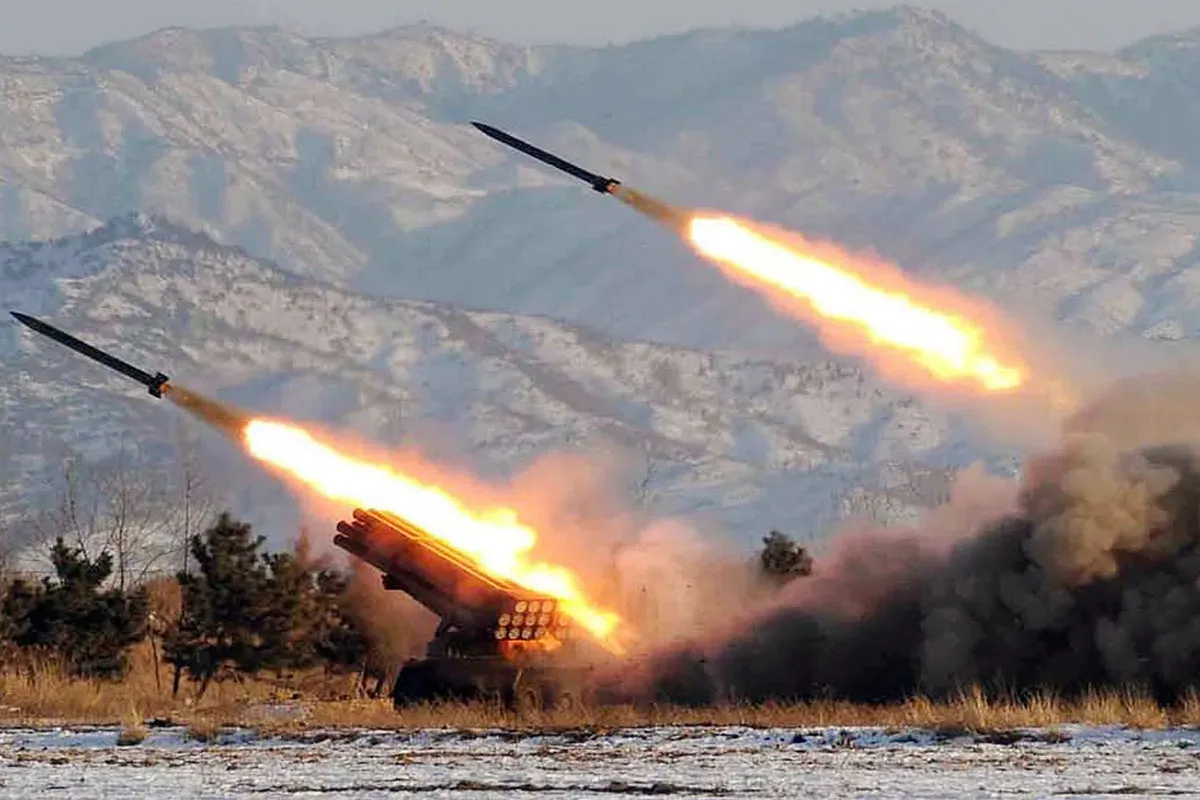
Regional Reactions and Emergency Security Meetings
The military display prompted swift condemnation across neighboring capitals:
-
South Korea: Seoul’s National Security Council (NSC) convened an emergency session to evaluate the threat, reiterating that the launches directly violate multiple United Nations Security Council resolutions banning North Korea from using ballistic missile technology.
-
Japan: Japanese government authorities registered a formal protest via diplomatic channels, condemning the test as a direct threat to regional stability and peace.
-
United States: The U.S. Indo-Pacific Command reaffirmed its ironclad commitment to the defense of both South Korea and Japan, noting that it is closely monitoring the situation alongside allied intelligence agencies.
Broader Geopolitical Implications
Security analysts point out that multi-missile salvo launches demonstrate North Korea's advancing operational readiness to deploy dense missile barrages intended to overwhelm regional defense systems. The ongoing weapons testing highlights persistent friction on the Korean Peninsula, underscoring the deep divide over denuclearization and security assurances. As joint US–South Korea maneuvers wrap up, regional militaries remain on high alert for follow-up actions or additional strategic tests from Pyongyang.
.png)
.png)
.png)