


A powerful magnitude 7.4 earthquake struck western Colombia near the town of San José del Palmar in the Chocó Department at 7:34 a.m. local time. The tremor—recorded at a depth of approximately 107 to 110 kilometers by the U.S. Geological Survey (USGS)—shook large swathes of the country, triggering widespread structural collapses, power outages, and emergency evacuations extending all the way to the capital, Bogotá.
At least 132 people have been confirmed dead, with more than 570 injured. Local and national authorities warn that casualties may climb further as search-and-rescue teams navigate massive piles of rubble. The coffee-growing hub of Pereira was among the hardest hit, accounting for at least 60 of the fatalities, while major structural damage was reported across Cali, Manizales, Quibdó, and Cartago. In Cali, sections of the University Hospital collapsed, trapping patients and pediatric unit healthcare workers beneath debris.
In response to the tragedy, Colombian President Abelardo De La Espriella declared a national state of emergency, establishing a unified command post to coordinate relief logistics and search efforts.
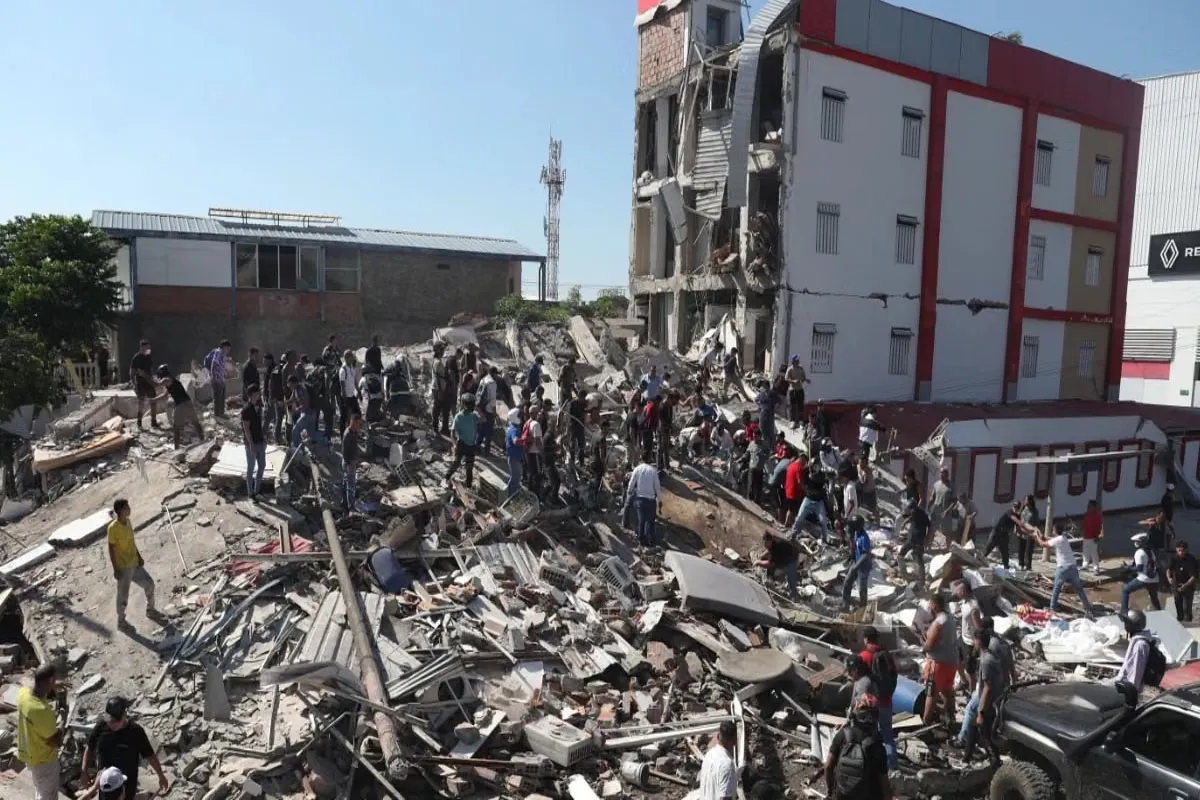
Why Was the Earthquake So Destructive? Structural Research Explains
While a magnitude 7.4 earthquake naturally delivers substantial ground force, structural engineering research helps explain why so many multi-story buildings suffered catastrophic failures.
1. Inadequate Concrete Wall ThicknessEngineering assessments and full-scale experimental testing conducted on Colombian design practices at institutions like ETH Zurich and the University of Newcastle highlight severe building design vulnerabilities across Latin America. Many mid-rise and high-rise residential structures in Colombia utilize thin reinforced concrete walls—often measuring just 7 to 10 centimeters thick. Under lateral earthquake loads, these ultra-thin walls lack the basic structural mass required to withstand intense horizontal movement.
2. Brittle Single-Layer Reinforcement
Standard construction practice in the region routinely relies on a single layer of steel reinforcement placed inside concrete walls, frequently composed of electrowelded wire mesh. Unlike heavy rebar grids that allow buildings to bend safely without breaking, brittle mesh ruptures abruptly under pressure. When severe shaking occurs, stress concentrates into a single major crack at the wall's base rather than distributing across multiple smaller micro-cracks, leading to sudden wall rupture and total structural collapse.
3. Lack of Confinement Steel
Because these walls are built so thin, contractors are unable to fit boundary "confinement steel"—hooped rebar designed to reinforce wall edges and prevent concrete crushing during sway. Surging urban housing development over recent decades left thousands of residents living in modern structures that failed to incorporate essential seismic ductility principles.
4. Deep Faulting & Tectonic Stress Communication
The USGS reported that the event occurred via strike-slip faulting at an intermediate depth. While deeper earthquakes usually dissipate energy over distance, stress transfer between nearby tectonic fault networks—potentially linked to recent seismic activity elsewhere in northern South America—can trigger high-frequency surface shaking that specifically targets mid-rise rigid concrete buildings.