

The Core Narrative: A 'Great Reversal' in Trade Dynamics
Speaking to reporters at the Oval Office, United States President Donald Trump expressed strong confidence that Washington and New Delhi are on the verge of finalizing a significant trade agreement. Trump highlighted what he described as a fundamental transformation—or a "great reversal"—in the historical economic dynamics between the two democratic allies.
Trump directly addressed past imbalances, asserting that India had historically used high tariffs to protect its own markets while enjoying relatively barrier-free access to American consumers. However, he emphasized that the current administration's aggressive reciprocal trade strategy has leveled the playing field, creating new financial windfalls for the United States.
"For years, India took advantage of the United States. They charged us tremendous tariffs and paid nothing. Now it is the exact reverse and we are making a lot of money with India. But we will get to a deal because I like your Prime Minister a lot," Trump stated during the White House press briefing.
The Modi Factor: Personal Chemistry Driving Geopolitics
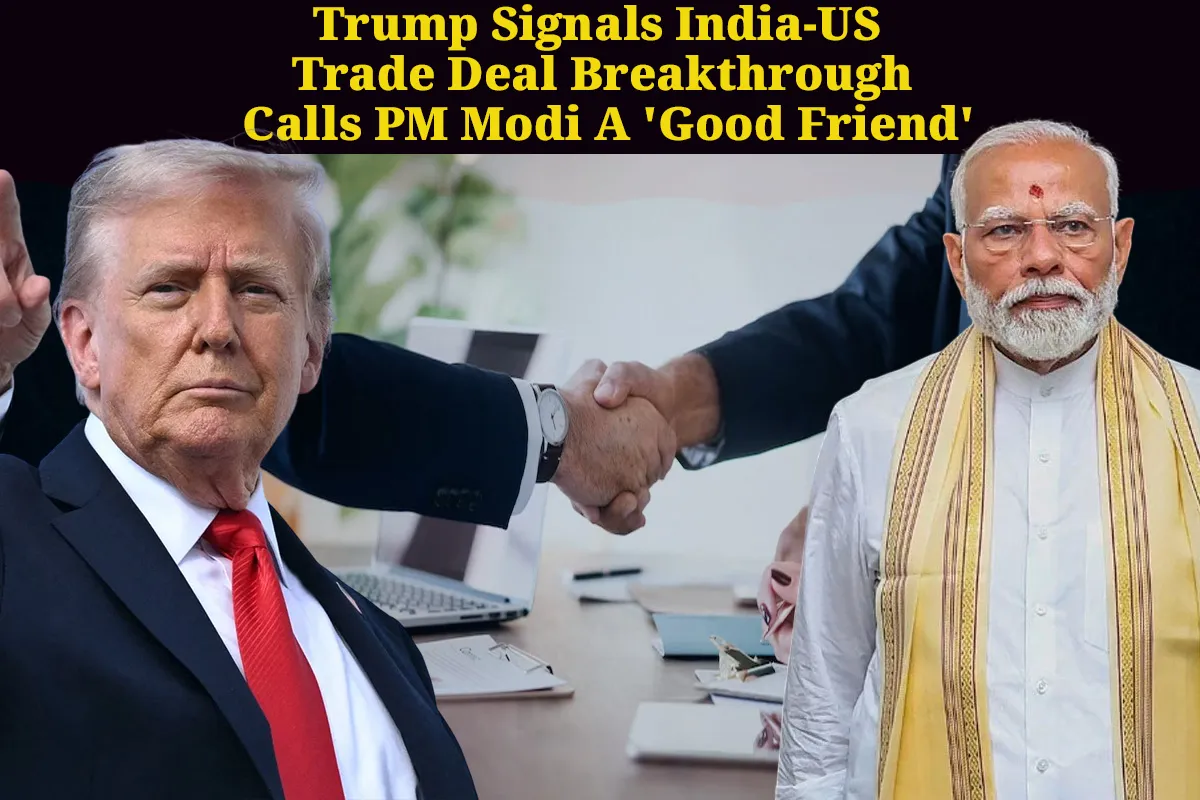
Despite his characteristically blunt assessment of past trade imbalances, President Trump leaned heavily into his personal rapport with Indian Prime Minister Narendra Modi as the ultimate catalyst for an upcoming breakthrough.
Describing Modi as a “good friend,” Trump noted that their mutual understanding has frequently broken bureaucratic deadlocks. Geopolitical analysts observe that this mix of economic pressure and top-tier leader diplomacy has defined the current wave of bilateral negotiations, allowing both nations to pursue their respective national interests without severing core strategic ties.
Key Friction Points: From Harley-Davidson to Section 301
To ground his criticisms in specific historical context, Trump explicitly pointed out long-standing disputes that have irritated Washington planners for years:
-
The Motorcycle Tariff Dispute: Trump cited the case of Harley-Davidson motorcycles, pointing out that India’s past 200% import levies forced the iconic American manufacturer to build assembly plants directly within India rather than exporting finished goods from the US.
-
The New Section 301 Probe Surcharges: The optimistic remarks come at a highly complex period. The Office of the US Trade Representative (USTR) recently initiated a Section 301 probe concerning global forced labor prevention frameworks. This probe threatens a fresh 12.5% tariff on over 60 economies, including India, China, Japan, and the UAE, unless verified domestic mechanisms are established.
-
The Energy and Russian Oil Equation: Bilateral trade talks have also occurred alongside high-stakes diplomatic maneuvering regarding India's procurement of Russian crude oil. While previous tariff penalties were rolled back following targeted strategic assurances, Washington continues to monitor supply chains closely ahead of key regulatory deadlines.
Current Status: Finalizing the Interim Trade Pact
The White House commentary closely followed the conclusion of four days of high-stakes, face-to-face trade negotiations held in New Delhi between June 1 and June 4. The American delegation, led by senior USTR negotiators, engaged extensively with Indian commerce ministry teams.
According to statements issued by India's Ministry of Commerce and Industry, the sessions were marked by pragmatism, flexibility, and cooperation. Officials from both sides have indicated that the first phase of an interim framework agreement is nearly finalized, leaving negotiators to clear minor details before a formal public signing ceremony.
.png)
.png)

3.png)
7.png)