

The Erosion of Legal Recourse in Rohtak's Political Landscape
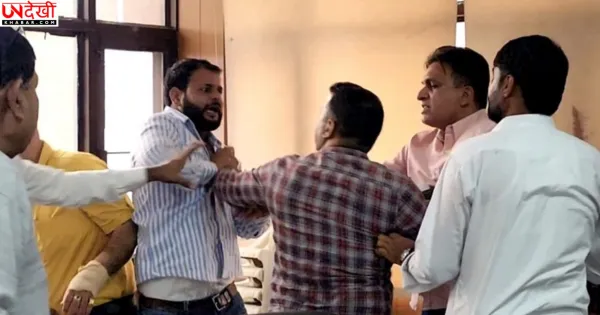
The foundation of any civil society relies heavily on the rule of law and the public's trust in judicial institutions. However, an alarming incident in Rohtak, Haryana, has dramatically underscored what happens when those in power choose to bypass the system altogether. Anil Hooda, the Vice-Chairman of the Rohtak Zila Parishad, was recently the target of an attack. While the assault itself is a serious matter of public safety, it is Hooda’s shocking aftermath reaction that has sent ripples of anxiety throughout the region.
Rather than turning to local law enforcement to identify and prosecute his attackers, Hooda has made a brazen public declaration: he will not file a First Information Report (FIR). Instead, he has openly vowed to take the law into his own hands, promising to "take revenge" and "settle the score completely within two days." This is not just a passing comment made in the heat of the moment; it is a calculated, public ultimatum that directly challenges the authority of the state police and the judiciary.
The Danger of the 48-Hour Ultimatum
By putting a strict two-day timeline on his planned retaliation, Hooda has essentially set a ticking time bomb in Rohtak. This public threat transforms a localized skirmish into a high-stakes spectacle of vigilante justice. When an elected representative—someone chosen to uphold the welfare and order of a district—openly advocates for street justice, it sets a highly dangerous precedent for the general public. It sends a message that the police are either ineffective or irrelevant, and that true power lies in one's ability to orchestrate physical retaliation.
Furthermore, this 48-hour deadline creates an atmosphere of immense fear and anticipation among local residents. The citizens of Rohtak are now forced to brace for an impending clash, knowing that retaliatory violence rarely stays contained and often spills over, affecting innocent bystanders.
Systemic Implications and the Role of Authorities
Hooda’s refusal to engage with the police raises critical questions about the current state of law and order in Haryana. Does his decision stem from a lack of faith in the local police’s ability to deliver justice? Or is it a display of raw political machismo, designed to project strength and intimidate rivals? Regardless of the underlying motivation, the result is the same: a blatant disregard for the legal framework.
This situation places an enormous burden on the local administration and law enforcement. The police cannot simply wait for a formal complaint to be filed when an open threat of violence has been broadcasted to the public. Preventive measures are urgently required. Authorities must take suo motu cognizance (acting on their own accord) of the threats made by Hooda and the initial attack that triggered them. Security in the region must be heightened, and both the attackers and those threatening retaliation must be brought under legal scrutiny to prevent further bloodshed.
Conclusion
The unfolding drama surrounding Anil Hooda is a stark reminder of the fragile line between democratic governance and feudal retribution. True leadership is demonstrated not through violent retaliation, but through a commitment to the rule of law, even when one is personally wronged. As the clock ticks on Hooda's two-day ultimatum, all eyes are on the Rohtak administration to see if they can de-escalate the situation and restore the authority of the badge over the rule of the mob.
1.png)