

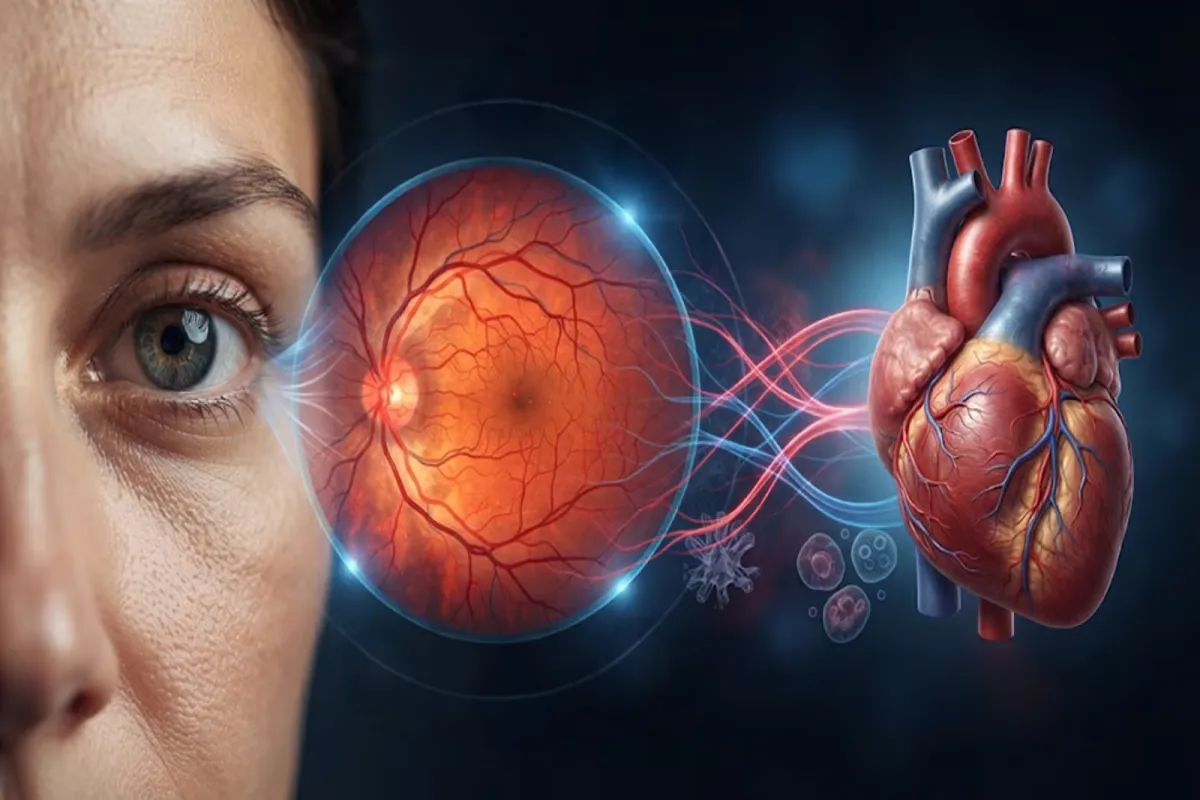
The human eye is often called a window to the soul, but in medical science, it is a direct window to your cardiovascular system. The retina at the back of the eye is one of the few places in the human body where live blood vessels and microscopic nerves can be viewed non-invasively without surgery. Because the blood vessels in your eyes are extremely thin and delicate, they often reflect damage from cardiovascular conditions—such as high blood pressure, elevated cholesterol, and poor circulation—long before traditional symptoms like chest pain or shortness of breath begin to surface.
Here is a detailed breakdown of how deteriorating heart health manifests in your eyes and what warning signs you should watch out for.
Warning Signs in the Eyes Linked to Heart Disease
1. Yellowish Bumps on Eyelids (Xanthelasma)
-
What it looks like: Soft, yellowish raised patches or bumps appearing around the inner corners of your eyelids.
-
Heart connection: These patches are localized deposits of cholesterol. While they do not hurt or impair vision, their presence often indicates high levels of LDL ("bad") cholesterol or systemic lipid imbalances, which significantly increase the risk of plaque buildup in the heart's arteries (atherosclerosis).
2. Gray or White Ring Around the Cornea (Arcus Senilis)
-
What it looks like: A light gray, white, or blueish ring forming around the outer edge of the cornea (the clear front part of the eye).
-
Heart connection: Caused by fatty lipid deposits. While common in elderly individuals, if this ring appears before the age of 45–50, it is a red flag for high cholesterol or familial hypercholesterolemia, a condition directly linked to early-onset heart attacks.
3. Sudden, Painless Vision Loss or Blurry Patches (Eye Stroke)
-
What it looks like: A sudden darkening, blurriness, or complete loss of vision in one eye that happens without any physical pain.
-
Heart connection: Known medically as Retinal Artery Occlusion (or an "eye stroke"), this occurs when a tiny blood clot or plaque embolus travels from the heart or carotid artery and blocks blood flow to the retina. An eye stroke is a critical medical emergency and a major predictor of a stroke or heart attack.
4. Narrowed, Twisted, or Leaking Retinal Vessels (Hypertensive Retinopathy)
-
What it looks like: Microscopic damage, tiny hemorrhages (bleeding spots), or narrowing of the retinal blood vessels.
-
Heart connection: Chronic high blood pressure puts extreme pressure on blood vessels throughout the body. In the eye, an ophthalmologist during a routine dilated eye exam can directly see stiff, narrowed, or leaking vessels. This damage directly mirrors similar strain on the heart's coronary arteries.
Why Routine Eye Exams Can Save Your Life
Many heart issues develop silently. Advanced diagnostic tools like Optical Coherence Tomography (OCT) scans and routine dilated eye exams allow doctors to spot micro-vascular damage and ischemia (lack of oxygen flow) in the retina early. Detecting these retinal changes often leads to early referrals to cardiologists for lipid testing, blood pressure management, and preventative therapy before a cardiac event occurs.
Who Should Be Extra Vigilant?
Regular eye checks are recommended for everyone over 40, but individuals in the following categories should prioritize comprehensive annual eye exams:
-
Individuals with high blood pressure or diabetes.
-
People with elevated cholesterol levels.
-
Heavy smokers or individuals with a family history of heart disease.
-
Anyone experiencing sudden, unexplained vision changes.